2814 S 107th Ave, Omaha, NE 68124

Watching a beloved dog or cat move through their home with complete ease is something most pet owners take for granted. Pets memorize floor plans, leap onto favorite chairs, and trot down hallways with effortless precision. However, when an animal suddenly begins misjudging doorframes, brushing against couch edges, or halting nervously before a flight of stairs, the sudden shift in behavior can be deeply troubling. Unexplained spatial confusion and awkward movement often signal acute optical changes or intraocular pressure shifts affecting depth perception.
Because companion animals adapt remarkably well by leaning on their acute sense of smell and sensitive whiskers, gradual visual decline can go unnoticed for weeks. When vision changes happen rapidly, however, the sudden loss of sight causes obvious hesitation, stress, and spatial mistakes. Searching for trusted vets near me allows pet parents to secure rapid diagnostic evaluations when unexpected optical changes occur. Seeking urgent pet care ensures that clinical teams evaluate ocular health promptly, identifying underlying causes and providing targeted treatments to preserve remaining sight. For families living in Omaha, recognizing the early warning signs of visual distress helps safeguard your companion’s quality of life and long-term mobility.
Anatomical Triggers Behind Sudden Visual Impairment
An animal’s ability to process light and navigate their environment relies on delicate, interconnected structures within the eye and optic nerve pathways. When sudden visual impairment occurs, it typically originates within one of several key anatomical areas.
Acute Corneal Clouding and Fluid Retention
The cornea serves as the clear front window of the eye globe. When an abrasion, deep ulcer, or internal uveitis occurs, excess fluid accumulates within corneal tissue layers. This fluid buildup creates a foggy, bluish-gray haze that obscures incoming light, making it difficult for pets to calculate distances or judge spatial boundaries accurately.
Intraocular Pressure Elevations
Fluid continuously circulates within the anterior chamber of the eye to maintain proper shape and nourish internal tissues. If internal drainage angles become obstructed, intraocular pressure rises sharply. High pressure strains delicate optic nerve fibers, leading to acute vision distortion, dilated pupils, and significant ocular discomfort.
Retinal Separation and Neural Impairment
The retina lines the back of the eye, converting light signals into neural messages sent directly to the brain. Systemic health shifts, internal inflammation, or vascular changes can cause the retina to detach from underlying support tissue, resulting in immediate loss of visual input.
Assessing Visual Changes: Observation vs. Clinical Needs
Distinguishing between minor behavioral hesitation and true optical distress requires observing how your pet interacts with their surroundings under varying lighting conditions.
- Safe for Home First Aid (Mild Variations):
- Minor, clear watery eye tearing following outdoor activity on a windy afternoon
- Transient, slight eye squinting that disappears completely after a brief rest
- Intact navigational confidence across both brightly lit and dark indoor spaces
- Equal pupil responses when transitioning between sunlit rooms and shaded indoor areas
- Indicators Demanding Urgent Vet Care
- Bumping into stationary household furniture, doorframes, or open cabinet doors
- Reluctance to navigate staircases, jump onto accustomed furniture, or move in dim light
- Wide, dilated pupils that fail to constrict when exposed to bright indoor lighting
- Cloudiness, bluish discoloration, or visible blood spots within internal eye structures
- Relentless pawing at the eyes, frequent head shaking, or keeping one eye held tightly shut
Point-of-Care Diagnostics for Optical Evaluation
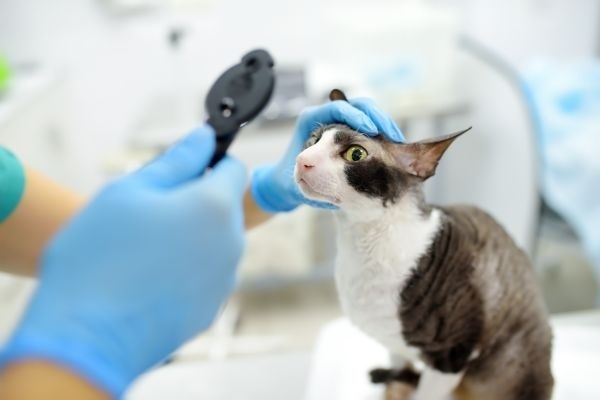
When you seek urgent vet care for navigational difficulties or ocular changes, clinical teams utilize specialized diagnostic tools to inspect eye structures without delay.
- Ophthalmic Tonometry Measurement: Evaluates intraocular fluid pressure using a gentle, non-invasive probe to detect pressure spikes instantly.
- Fluorescein Stain Testing: Uses a temporary, specialized dye to highlight hidden corneal scratches, surface ulcers, or tissue tears under cobalt blue light.
- Slit-Lamp and Ophthalmoscopic Examination: Delivers high magnification to inspect lens clarity, the anterior chamber, iris reactivity, and retinal tissue alignment in real time.
Combining instant diagnostic feedback with pet-safe anti-inflammatory drops, protective lubrications, or pressure-regulating medications stops discomfort at its source and protects your companion’s remaining sight.
Supporting Companion Animals Across Omaha
Protecting your pet’s visual health requires attentive daily observation and maintaining a consistent home environment. Checking your companion’s eyes during routine petting sessions allows you to spot minor cloudiness, pupil asymmetry, or surface redness before mobility is affected.
If you are from Omaha and looking for urgent vet care, taking fast action at the first sign of visual disorientation provides your pet with the best opportunity for effective treatment and maximum visual preservation.
Providing timely medical attention when health changes occur preserves your companion’s quality of life and ensures complete peace of mind for your entire family.
Taking Action for Your Pet’s Visual Comfort
When your dog or cat exhibits sudden navigational changes, eye cloudiness, or physical discomfort, securing a prompt evaluation keeps their recovery moving in the right direction. You can schedule an online appointment through our portal to reserve a convenient time for your pet to be examined by our clinical team.
If your companion is actively displaying uncomfortable eye symptoms or sudden visual changes and you prefer to speak directly with our clinical staff before arriving, please call our team at 402-397-2424 so we can offer immediate guidance and prepare for your visit.
Our dedicated medical staff looks forward to delivering gentle, high-quality care for your companion at Rockbrook Animal Clinic.
Frequently Asked Questions
Q1. Why does my pet bump into things more often in dim or dark rooms?
Ans: Night blindness or difficulty navigating low-light environments often serves as an early indicator of retinal changes or mature cataracts. Because pupils must dilate significantly to capture limited light, subtle structural impairments in the eye become much more pronounced in dark settings, leading to spatial miscalculations.
Q2. Can a pet adapt to sudden vision loss safely within the home?
Ans: Yes, pets possess remarkable adaptive abilities relying on their acute sense of smell, hearing, and facial whiskers. Once any underlying medical pain or ocular pressure is controlled through clinical treatment, most dogs and cats learn to navigate familiar household layouts confidently as long as furniture remains in consistent locations.
Q3. Is sudden vision loss in dogs and cats always permanent?
Ans: Not necessarily. Whether vision loss is reversible depends entirely on the underlying cause and how quickly clinical treatment begins. Conditions like corneal edema, temporary inflammatory clouding, or early pressure elevations can often improve significantly when diagnosed and managed early with targeted veterinary therapies.
Q4. Should I keep my home layout the same if my pet is losing sight?
Ans: Yes. Keeping furniture, water bowls, feeding stations, and pet beds in fixed locations helps visually impaired pets maintain a strong mental map of their environment. Avoiding clutter on floors and blocking access to open staircases with safety gates prevents accidental trips or falls.
Q5. How should I safely transport a pet experiencing visual changes to the clinic?
Ans: Keep your vehicle cool, quiet, and well-ventilated to minimize stress. Carry small pets in a soft, padded carrier lined with familiar blankets. For larger dogs, use a short leash with gentle vocal encouragement, and assist them carefully when stepping in and out of the vehicle.