2814 S 107th Ave, Omaha, NE 68124

402-397-2424
Book Online
Rockbrook Animal Clinic Logo
  • About
    • Meet Our Doctors
      • Dr. Martin Ramm
      • Dr. Matt Vipond
      • Dr. Amanda Valadez
      • Dr. Jessica Ramm
      • Dr. Natalie Allen
    • Meet Our Team
    • What to Expect
    • Reviews
    • Blog
  • Services
    • Wellness Care
    • Vaccinations
    • Puppy & Kitten Care
    • Diagnostic Care
    • Dental Care
    • Spay & Neuter
    • Pet Surgery
    • Pain Management
    • Laser Therapy
    • Senior Pet Care
    • Stem Cell Therapy
    • Urgent Care
  • Resources
    • New Client Info
      • New Client Form
    • Payment Options
    • Online Pet Pharmacy
    • FAQs
  • Contact
402-397-2424
Book Online

February Newsletter: Where to Start When Training Your Puppy

Back
Image
Created in Newsletter Library

Where to Start When Training Your Puppy

Without training, your cute, cuddly puppy could become difficult to live with in a matter of months. Luckily, early socialization and training will help your pet learn how to behave in any situation.

Socialization Provides the Foundation for Training

The moment your puppy walks through your front door, it’s greeted with new sights, sounds, and smells. Not surprisingly, the experience can be a little overwhelming for a young pet. Concentrating on socialization and adjustment during the first few weeks will improve your puppy’s confidence and set the stage for training.

Socialization can include:

  • Meeting Family Members. Ask everyone who lives in your home to spend a little time gently handing the puppy. If you have children, supervise their interactions with the puppy, as young kids may become too rough when they’re excited.
  • Exploring Your Home. Whether you live in a small apartment or a large house, your home will seem enormous to your puppy. In the beginning, it may be helpful to use baby gates to confine your pet to one or two rooms of your home. Once your pet becomes comfortable in those spaces, gradually introduce it to the rest of your home.
  • Creating a Den. Crates serve as dens and help puppies feel safe and secure. Thinking of buying a bigger crate that will fit your puppy as it grows? Use partitions to create a smaller, puppy-sized space. If the crate is too big, your puppy may be tempted to use one end as a bathroom. Adding a soft blanket or pad makes the crate a comfortable place to sleep.
  • Introducing New People and Places. Expose your puppy to as many new people and places as possible during its first few months. Ask your friends to stop by (one at a time) to meet your new addition. Go for walks around your neighborhood, or take your pet to the pet store. Although new experiences are important, wait for vaccinations to take effect before visiting places where your puppy could come in contact with other dogs. The American Kennel Club recommends waiting 7 to 10 days after the final vaccination series to make a trip to a dog park.
  • Establishing a Routine. Just like children, puppies need regular routines. Provide meals at the same time every day, and stick to the same bedtime routine. Set the stage for house training by taking your pet outside to relieve itself every hour or two during the day, first thing in the morning, after meals and naps, and before bedtime.

Important Skills to Teach Your Puppy

After your puppy has been with you for a few weeks, begin teaching these skills:

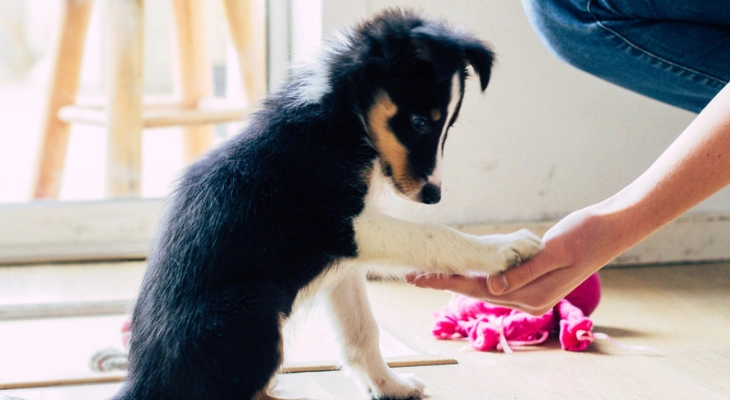
  • Commands. Teaching basic commands, like sit, stay and come, not only makes life more pleasant at home but ensures that your dog will be welcome in public places. Use positive reinforcement only when training your pet. Hitting or scolding your dog won’t help it learn commands faster and may make your dog become fearful. For example, when teaching the sit command, say the word, “sit,”, then gently push your dog’s back end down. Immediately, offer a small treat to help your pet make a positive association between the word and the action. PetMD notes that training can begin when your puppy is young as 8 weeks but recommends limiting early training sessions to no longer than five minutes.
  • Walking on a Leash. Learning how to walk on a leash without pulling is one of the most important skills your dog can learn. Attach the leash with a harness that fits around your puppy’s abdomen and chest, rather than a collar. Start leash training gradually by letting your puppy play in your home wearing the harness and leash. Work on walking on the leash in your home before eventually venturing outside. Offer treats when your puppy walks by your side, even it’s only for a few steps.
  • House Training. Thanks to the schedule you started when you brought your puppy home, your new pet should already associate outdoors with elimination. Puppies usually can’t control their bladders and bowels until about three or four months, which is when housetraining should start. When you take your puppy outside, say “potty,” (or any word you want) to indicate that it’s time to eliminate. If your puppy urinates or defecates, praise it or offer a treat.

Has your new puppy visited the veterinarian yet? Give our office a call to schedule your pet’s first appointment.

Sources:

American Kennel Club: Puppy Socialization: Why, When and How to Do It Right, 7/7/2022

https://www.akc.org/expert-advice/training/puppy-socialization/

PetMD: How to Start Training Your Puppy

https://www.petmd.com/dog/training/when-start-training-puppy

Hill’s: Puppy Obedience Training: Tips for a Successful Approach, 8/3/2018

https://www.hillspet.com/dog-care/training/puppy-obedience-training

American Kennel Club: Puppy Training Timeline: Teaching Good Behavior Before It’s Too Late, 1/1/2022

https://www.akc.org/expert-advice/training/puppy-training-timeline-teaching-good-behavior-before-its-too-late/

Categories

Choosing Your Pet
  • Cats
  • Dogs
  • Exotics
  • Finding Your Pet
  • Livestock
  • Small Mammals
Client Survey
Living With Your Pet
  • Bringing Your Pet Home
  • Children and Pets
  • Providing Care
  • Saying Goodbye
  • Travel
Newsletter Library
  • Behavior & Training
  • Cats
  • Equine
  • Fleas & Parasites
  • Keeping Pets Healthy
  • Newsletter Archive
  • Nutrition & Food
  • Pet Dangers
  • Recognizing Illness
  • Seasonal Topics
  • Tips for Pet Owners
  • Visiting the Vet
Pet Health
  • Chronic Conditions
  • Digestive and Oral Health
  • Diseases and Viruses
  • Orthopedics
  • Pests and Parasites
Pets4Kids
Today's Veterinarian
Video Newsroom
  • Health Topics
  • Other Interests
  • Technology and Science

Where Every Pet Is Welcomed and Cared for like Family

402-397-2424
Book Online

Reviews


Trusted by Pet Parents Like You

Quote Icon
I came here after having a not so great experience at my cat’s previous vet and was amazed by how nice and caring Dr. Natalie is. I love that she sat on the floor when she was in the room with us because it definitely makes things feel less intimidating. I felt comfortable having her see my cat and knew that she would take good care of him. I love her personality and all the suggestions she gave me to my questions and concerns. The pricing here is also very reasonable. Overall, would recommend to a friend!

Jennifer D.

Quote Icon
They are always so compassionate and clearly care about my animals but they are also understanding of financial constraints. They don't offer payment plans or anything but they do their best not to go crazy with stuff without discussing the cost which I really appreciate. Every doctor and tech is so kind and makes me feel like they are doing all they can to help my pets live full and happy lives.

Leslie S.

Quote Icon
We have a new rescue (first appointment) that is very scared of new people based on her history before being rescued. They made it the top priority to make her feel welcome and comfortable before ever checking her out. They sat on the floor with her and gave her pets and treats first. It made the appointment very easy for her and I.

Adam R.

Quote Icon
My blue heeler needed staples due to altercation with my other dog. Nurse was super friendly with our pet and us. Doctor was good and care was fast. Buisness was clean and inviting. Follow up phone calls were same day regarding pill questions. Great experience. Charge was very affordable. Going back in a week for staple removal.

Mama T.

Quote Icon
We saw Dr Ramm for many years and he was hands down the best Vet I have ever had. House visits for established patients, always available for questions. Very knowledgeable and kind towards our animals and us. If we could have taken him to Florida with when we moved, Florida would be a better place. We miss having him as our vet so much.

Davin C.

Read More Reviews

Testimonials

Office Front Gate

Contact Info

2814 S 107th Ave, Omaha, NE 68124

402-397-2424

Rockbrook Animal Clinic Logo

Office Hours

Mon–Thu: 8:00 AM – 6:00 PM
Fri: 8:00 AM – 5:00 PM
Sat: 8:00 AM – 1:00 PM
Sun: Closed
© 2026 Rockbrook Animal Clinic. All Rights Reserved. | Privacy Policy | Terms of Use | Accessibility | Sitemap
Rockbrook Animal Clinic Logo
  • About
    • ← Back
    • Meet Our Doctors
      • ← Back
      • Dr. Martin Ramm
      • Dr. Matt Vipond
      • Dr. Amanda Valadez
      • Dr. Jessica Ramm
      • Dr. Natalie Allen
    • Meet Our Team
    • What to Expect
    • Reviews
    • Blog
  • Services
    • ← Back
    • Wellness Care
    • Vaccinations
    • Puppy & Kitten Care
    • Diagnostic Care
    • Dental Care
    • Spay & Neuter
    • Pet Surgery
    • Pain Management
    • Laser Therapy
    • Senior Pet Care
    • Stem Cell Therapy
    • Urgent Care
  • Resources
    • ← Back
    • New Client Info
      • ← Back
      • New Client Form
    • Payment Options
    • Online Pet Pharmacy
    • FAQs
  • Contact

402-397-2424

2814 S 107th Ave, Omaha, NE 68124

Book Online
Pet Portal