2814 S 107th Ave, Omaha, NE 68124

402-397-2424
Book Online
Rockbrook Animal Clinic Logo
  • About
    • Meet Our Doctors
      • Dr. Martin Ramm
      • Dr. Matt Vipond
      • Dr. Amanda Valadez
      • Dr. Jessica Ramm
      • Dr. Natalie Allen
    • Meet Our Team
    • What to Expect
    • Reviews
    • Blog
  • Services
    • Wellness Care
    • Vaccinations
    • Puppy & Kitten Care
    • Diagnostic Care
    • Dental Care
    • Spay & Neuter
    • Pet Surgery
    • Pain Management
    • Laser Therapy
    • Senior Pet Care
    • Stem Cell Therapy
    • Urgent Care
  • Resources
    • New Client Info
      • New Client Form
    • Payment Options
    • Online Pet Pharmacy
  • Contact
402-397-2424
Book Online

Learn How to Master Walking Your Dog for Walk Your Pet Month

Back
Image
Created in Newsletter Library, Seasonal Topics

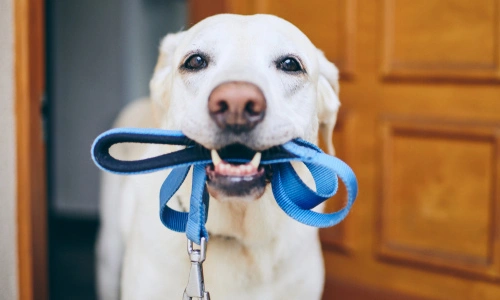
Making Walks with Your Dog More Enjoyable

You’ve probably heard people joke, “Are you walking your dog, or is your dog walking you?” In fact, your dog might actually be controlling the walk if it never received any leash training. An untrained dog may pull on the leash or try to dash off to chase a squirrel while you struggle to hold on to the leash. Fortunately, these problems can usually be corrected with a little training.

How Training Makes Walking Your Dog Easier

Just like children, dogs don’t innately understand the rules of social conduct when they’re born. With gentle corrections and explanations, kids soon learn not to touch the stove or grab a toy out of the hands of a sibling. Dogs also need a little help to understand what you expect of them.

During leash training sessions, your dog will learn how to walk calmly at your side without pulling or sniffing every patch of grass along the way.

What You Can Do About Pulling

Walks can be stressful if you don’t feel that you’re in control of your dog. Unfortunately, stress isn’t the only issue if your furry friend pulls on the leash. Pulling can increase your risk of falls and injuries ranging from strains and sprains to fractures. If you’re older and have started walking your dog as a way to stay healthy, avoiding pulling is particularly important.

Researchers at Penn Medicine discovered that fractures related to dog walking doubled in patients 65 and older between 2004 and 2017. Hip, arm, wrist, finger, hand, and shoulder fractures were the types of breaks most commonly reported.

When your dog begins to pull, one of these methods recommended by Rover.com may be helpful:

  • Make an About Turn. Change directions once your dog reaches the end of the leash and you notice a slight strain on the leash. When your dog changes direction with you, offer a treat or word of praise.
  • Don’t Move. Stop moving as soon as your dog begins pulling on the leash. Once the dog stops pulling, start walking again. Constantly repeating this action will teach your dog that walks won’t continue until the pulling stops.
  • Try a Harness: A no-pull harness may be an effective option if your dog still pulls. Gentle pressure placed on the chest or legs reminds your dog not to strain against the leash.

When you work on training your dog to walk properly on a leash, keep these things in mind:

  • Positive Reinforcement Is the Best Choice. Training sessions that use praise and rewards as incentives are most effective. If your dog knows that doing what you want will result in a treat or praise, it will be much more likely to follow the rules you’ve established.
  • Patience Is a Must. Your dog probably won’t master walking on a leash after just one training session. In fact, you may need to spend a few weeks or months helping your dog learn the ins and outs of leash walking.
  • Try Some Pre-Walk Exercise. Walking calmly on a leash may be difficult if your dog has been cooped up in the house all day. Help your pooch expend that excess energy by throwing a ball or flying disc in the backyard for 20 minutes before you start your walk.
  • Don’t Use a Retractable Leash When Training Your Dog. Retractable leashes may only reinforce pulling behavior. Every time your dog pulls, the leash unwinds a little more, teaching your dog that pulling gets results.
  • Consider Obedience Training. During obedience training, you’ll learn how to teach your dog commands and also practice how to walk on a leash. Commands are particularly important when walking on a leash. For example, when you say, “leave it,” your dog will know it’s time to stop sniffing an aromatic patch of urine-scented grass or ignore a squirrel. The “slow” command tells your pet to slow down, which will reduce leash pulling.

Walk Your Pet Month, observed every January, is an excellent time to work on leash skills. Learning how to walk on a leash will make walks more pleasant and help your pet avoid injuries from cars and other animals. If your pet does become injured or develops a health issue, let us know. We’ll schedule a convenient appointment to examine your dog and discuss your concerns.

Sources:

Penn Medicine News: Bone Fractures Increasing as Seniors Walk Dogs to Stay Active, 3/6/19

American Kennel Club: 3 Ways You Might Be Ruining Your Dog’s Walk, 7/28/19

Rover.com Have You Been Walking Your Dog Wrong This Whole Time?

Dog Time: Good Leash Behavior: How To Train Your Puppy Or Dog To Walk On A Leash

Categories

Choosing Your Pet
  • Cats
  • Dogs
  • Exotics
  • Finding Your Pet
  • Livestock
  • Small Mammals
Client Survey
Living With Your Pet
  • Bringing Your Pet Home
  • Children and Pets
  • Providing Care
  • Saying Goodbye
  • Travel
Newsletter Library
  • Behavior & Training
  • Cats
  • Equine
  • Fleas & Parasites
  • Keeping Pets Healthy
  • Newsletter Archive
  • Nutrition & Food
  • Pet Dangers
  • Recognizing Illness
  • Seasonal Topics
  • Tips for Pet Owners
  • Visiting the Vet
Pet Health
  • Chronic Conditions
  • Digestive and Oral Health
  • Diseases and Viruses
  • Orthopedics
  • Pests and Parasites
Pets4Kids
Today's Veterinarian
Video Newsroom
  • Health Topics
  • Other Interests
  • Technology and Science

Where Every Pet Is Welcomed and Cared for like Family

402-397-2424
Book Online

Reviews


Trusted by Pet Parents Like You

Quote Icon
I came here after having a not so great experience at my cat’s previous vet and was amazed by how nice and caring Dr. Natalie is. I love that she sat on the floor when she was in the room with us because it definitely makes things feel less intimidating. I felt comfortable having her see my cat and knew that she would take good care of him. I love her personality and all the suggestions she gave me to my questions and concerns. The pricing here is also very reasonable. Overall, would recommend to a friend!

Jennifer D.

Quote Icon
They are always so compassionate and clearly care about my animals but they are also understanding of financial constraints. They don't offer payment plans or anything but they do their best not to go crazy with stuff without discussing the cost which I really appreciate. Every doctor and tech is so kind and makes me feel like they are doing all they can to help my pets live full and happy lives.

Leslie S.

Quote Icon
We have a new rescue (first appointment) that is very scared of new people based on her history before being rescued. They made it the top priority to make her feel welcome and comfortable before ever checking her out. They sat on the floor with her and gave her pets and treats first. It made the appointment very easy for her and I.

Adam R.

Quote Icon
My blue heeler needed staples due to altercation with my other dog. Nurse was super friendly with our pet and us. Doctor was good and care was fast. Buisness was clean and inviting. Follow up phone calls were same day regarding pill questions. Great experience. Charge was very affordable. Going back in a week for staple removal.

Mama T.

Quote Icon
We saw Dr Ramm for many years and he was hands down the best Vet I have ever had. House visits for established patients, always available for questions. Very knowledgeable and kind towards our animals and us. If we could have taken him to Florida with when we moved, Florida would be a better place. We miss having him as our vet so much.

Davin C.

Read More Reviews

Testimonials

Office Front Gate

Contact Info

2814 S 107th Ave, Omaha, NE 68124

402-397-2424

Rockbrook Animal Clinic Logo

Office Hours

Mon–Thu: 8:00 AM – 6:00 PM
Fri: 8:00 AM – 5:00 PM
Sat: 8:00 AM – 1:00 PM
Sun: Closed
© 2026 Rockbrook Animal Clinic. All Rights Reserved. | Privacy Policy | Terms of Use | Accessibility | Sitemap
Rockbrook Animal Clinic Logo
  • About
    • ← Back
    • Meet Our Doctors
      • ← Back
      • Dr. Martin Ramm
      • Dr. Matt Vipond
      • Dr. Amanda Valadez
      • Dr. Jessica Ramm
      • Dr. Natalie Allen
    • Meet Our Team
    • What to Expect
    • Reviews
    • Blog
  • Services
    • ← Back
    • Wellness Care
    • Vaccinations
    • Puppy & Kitten Care
    • Diagnostic Care
    • Dental Care
    • Spay & Neuter
    • Pet Surgery
    • Pain Management
    • Laser Therapy
    • Senior Pet Care
    • Stem Cell Therapy
    • Urgent Care
  • Resources
    • ← Back
    • New Client Info
      • ← Back
      • New Client Form
    • Payment Options
    • Online Pet Pharmacy
  • Contact

402-397-2424

2814 S 107th Ave, Omaha, NE 68124

Book Online
Pet Portal