2814 S 107th Ave, Omaha, NE 68124

Created in Newsletter Library
Socialization Tips for Puppies and Adult Dogs
Socialization is one of the most important aspects of raising a well-adjusted dog. The socialization process helps your pet feel comfortable and react appropriately in a variety of situations. Although socialization usually starts when your pet is a puppy, older dogs can also be successfully socialized.
9 Socialization Tips For Puppies and Adult Dogs
The American Kennel Club advises that 5 to 16 weeks is the best time to socialize a puppy. Exposing your pet to many different experiences is the key to helping your puppy feel confident in new situations. Although puppyhood offers the ideal window for socialization, it’s never too late to socialize an older dog. Contrary to popular belief, older dogs can learn new tricks and can be successfully socialized.
The socialization process doesn’t just improve your pet’s behavior and ability to adjust to new situations, but may also enhance brain health. Researchers from the University of Kentucky’s Sanders-Brown Center on Aging and the University of California Irvine discovered that socialization and behavioral enrichment increased the size of the hippocampus in dogs enrolled in a study on age-related brain health.
The hippocampus, important for memory and learning, tends to shrink in people and pets with dementia. Offering opportunities for socialization during your pet’s life could help improve your dog’s brain health.
Ready to socialize your puppy or adult dog? Check out these tips:
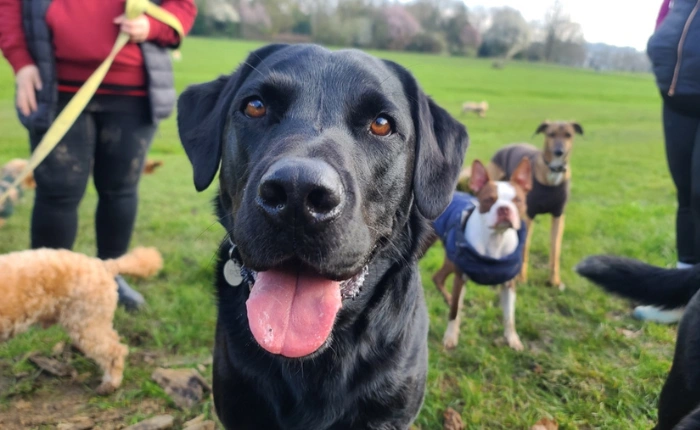
- Schedule Meet and Greets. A well-adjusted dog is friendly and reacts calmly when meeting people and other dogs and pets. Exposing your dog to people of all ages and races, in addition to pets, gives your furry friend plenty of experience. Choose well-mannered, friendly dogs for doggy play dates.
- Make Sure Your Dog Is Vaccinated. Vaccinations help your dog avoid common illnesses and are particularly important before you begin socialization.
- Don’t Overwhelm Your Pet. A large, noisy party at your house isn’t the time to introduce your new puppy or dog to the people in your life. Meeting friends or family members one-on-one or in small groups is less stressful at first.
- Keep It Friendly. Make sure your dog develops positive associations with pets and people by managing introductions carefully during the initial socialization process. Your pet may react fearfully if you introduce it to a poorly behaved older dog or children who can’t resist poking and prodding it.
- Reward Your Pet. Offer a treat and praise when your dog reacts calmly to a new person experience or reacts to another dog without barking. Rewards help your pet associate the meeting as a positive experience.
- Enroll in a Class. Puppy training classes and obedience training provide the perfect opportunity for your dog to meet other dogs in a safe, controlled setting.
- Focus on Experiences. Expose your pet to a variety of places, sights, sounds, and smells. Take your dog for walks in quiet areas before tackling busy or loud areas. Help your puppy get used to different surfaces by introducing it to gravel paths, tile floors, lawns, fields, and sandy beaches. Expose your dog to busy streets full of cars and bicycles, quiet fields, wooded areas, lakes and ponds, and other environments.
- Pay Attention to Body Language. Some pets are more timid or fearful than others and may react aggressively if pushed out of their comfort zone. If your puppy or dog growls, barks, shakes, whimpers, or seems frightened when facing a new situation or meeting a person or dog, stop the interaction and try again on another day.
- Tailor Socialization to Your Pet’s Personality. Slow down the socialization process if your pet struggles with specific situations. If your dog react fearfully to a situation that involves both a new environment and new people or animals, focus on one aspect at a time. For example, if you want to take your dog to the dog park, visit during the early morning when you’re likely to have the park to yourself. When your dog becomes comfortable with the park, schedule a visit when a few dogs may be present.
Does your new puppy or dog need vaccinations? Is your furry friend struggling with socialization? We can help. Contact our office to schedule an appointment with the veterinarian.
Sources:
PetMD: How to Socialize a Puppy and Why It’s So Important, 11/3/2023
https://www.petmd.com/dog/behavior/how-to-socialize-puppy
American Kennel Club: Creativity & Critical Timing Are Key to Puppy Socialization, 1/22/2026
https://www.akc.org/expert-advice/dog-breeding/creativity-and-timing-key-to-puppy-socialization/
University of Kentucky College of Medicine: Sanders-Brown Research Shows Clear Connection Between Socialization, Enrichment and Brain Health, 7/25/2024
https://medicine.uky.edu/news/sanders-brown-research-shows-clear-connection-2024-07-25t08-34-47
Guide Dog Foundation: How To Socialize An Older Dog
https://www.guidedog.org/gd/events-and-news/How_To_Socialize_An_Adult_Dog.aspx
Purina: How to Socialize Your Dog, 1/28/2026
https://www.purina.com/articles/dog/behavior/training/how-can-i-socialize-my-dog