2814 S 107th Ave, Omaha, NE 68124


Is a Wet Nose a Sign of a Healthy Pet?
Created in Newsletter Library, Recognizing Illness
Have you ever heard that a wet nose is a sign that your pet is healthy? Although that’s often the case, it’s not always true. A moist nose can benefit your pet in several ways, but it doesn’t necessarily guarantee good health. How Does a Wet Nose Help My Pet? Have you ever been woken at 5 a.m. by a
Learn More

Helping Dogs with Low Vision or Blindness
Created in Newsletter Library, Recognizing Illness
As veterinary medicine advances, dogs are living longer and longer. With advancing age, more geriatric diseases are becoming prevalent. Problems with vision, such as cataracts, glaucoma, and keratitis, are common. Many of these problems occur so gradually that some people don’t know they have a blind dog if the dog is very accustomed to the house. But some dogs have
Learn More

H1N1 or Swine Flu Virus
Created in Newsletter Library, Recognizing Illness
The H1N1 or swine flu epidemic has many people concerned. It certainly holds the potential for severe, worldwide disease in humans. Currently, most cases in the U.S. have not been as serious as in other countries. Flu viruses commonly mutate though, and even a small mutation could increase the pathogenicity to critical levels for both animals and people.Swine influenza virus
Learn More

Glaucoma in Pets: What You Need to Know
Created in Newsletter Library, Recognizing Illness
Glaucoma is typically a disease affecting middle- age to older pets. The symptoms can be very insidious in that they may not be noticeable at first, but eventually you may see a red eye or a dilated pupil, and ultimately, as the disease progresses, you can see that the eyeball is larger than normal. Glaucoma Is Serious Glaucoma is increased
Learn More

Gastroenteritis in Pets
Created in Newsletter Library, Recognizing Illness
Lengthy bouts of vomiting and diarrhea can be a sign that your pet has gastroenteritis, a common condition that occurs when the lining of the stomach and intestines becomes irritated. Since frequent diarrhea and vomiting can lead to dehydration, a visit to the veterinarian is a good idea if you notice any of the signs of gastroenteritis. What Causes Gastroenteritis?
Learn More

Fatal Rabies Disease is Preventable
Created in Newsletter Library, Recognizing Illness
Pets need to be vaccinated to prevent against rabies. Rabies is a fatal viral zoonosis and veterinarians believe that all mammals are susceptible to it. This disease puts the public at risk and prevention measures are urged. Rabies is transmitted through saliva. It enters the body of person or pet through an opening in the skin, typically a bite wound.
Learn More

Do You Know the Facts About Canine Lyme Disease?
Created in Newsletter Library, Recognizing Illness
If your dog shows signs of stiffness or begins limping, you may assume that arthritis is to blame. Unfortunately, joint pain can also be a sign of canine Lyme disease. Learning the facts about this tick-borne disease can help you ensure that your pet receives prompt treatment. How is Lyme Disease Transmitted? People and animals develop Lyme disease after being
Learn More
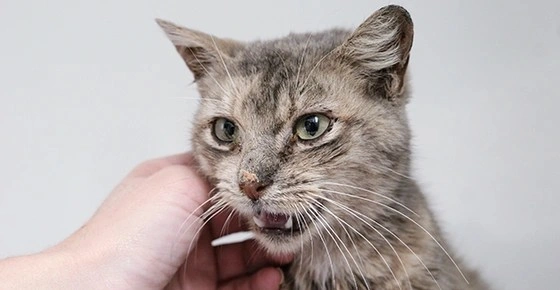
Don’t Sneeze at Pet’s Cold or Flu-Like Symptoms – Get to Your Vet
Created in Newsletter Library, Recognizing Illness
On February 14, 2011 IDEXX Research Laboratories confirmed that the 2009 H1N1 influenza virus was present in two cats from the same Wisconsin home. The cats were treated at an emergency veterinary hospital for severe respiratory distress. The owner of the cats had been experiencing flu-like symptoms. The American Veterinary Medical Association (AVMA) suggests the cats became ill when the
Learn More
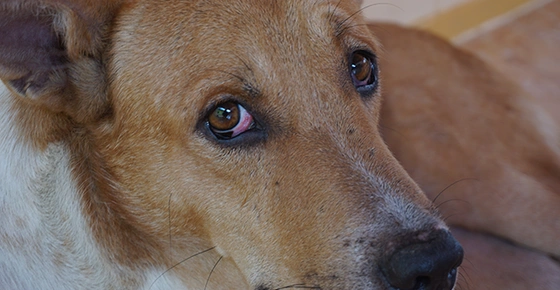
Evaluation and Diagnosis of a Red Eye in Dogs
Created in Newsletter Library, Recognizing Illness
Dogs occasionally develop a red eye. The redness may be in the white of the eye, in the clear part of the eye called the cornea, or within the eyeball. There are many causes of a red eye, but all ocular diseases should always be considered an urgent matter, and be checked immediately by a veterinarian. Evaluation A dog owner
Learn More
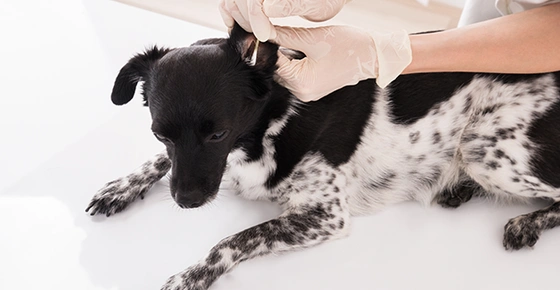
Ear Problems for Pets
Created in Newsletter Library, Recognizing Illness
Symptoms of ear disease are shaking the head, scratching at the ears, discharge from the ear canal, odor from the ear, or redness of the ear flap or entrance to the ear canal. Your pet may be tilting their head to one side although it’s important to point out that there are causes for this other than ear disease. The
Learn More